Protecting the Andes: How Conservation Efforts Safeguard the Andean Bear and Its Ecosystem
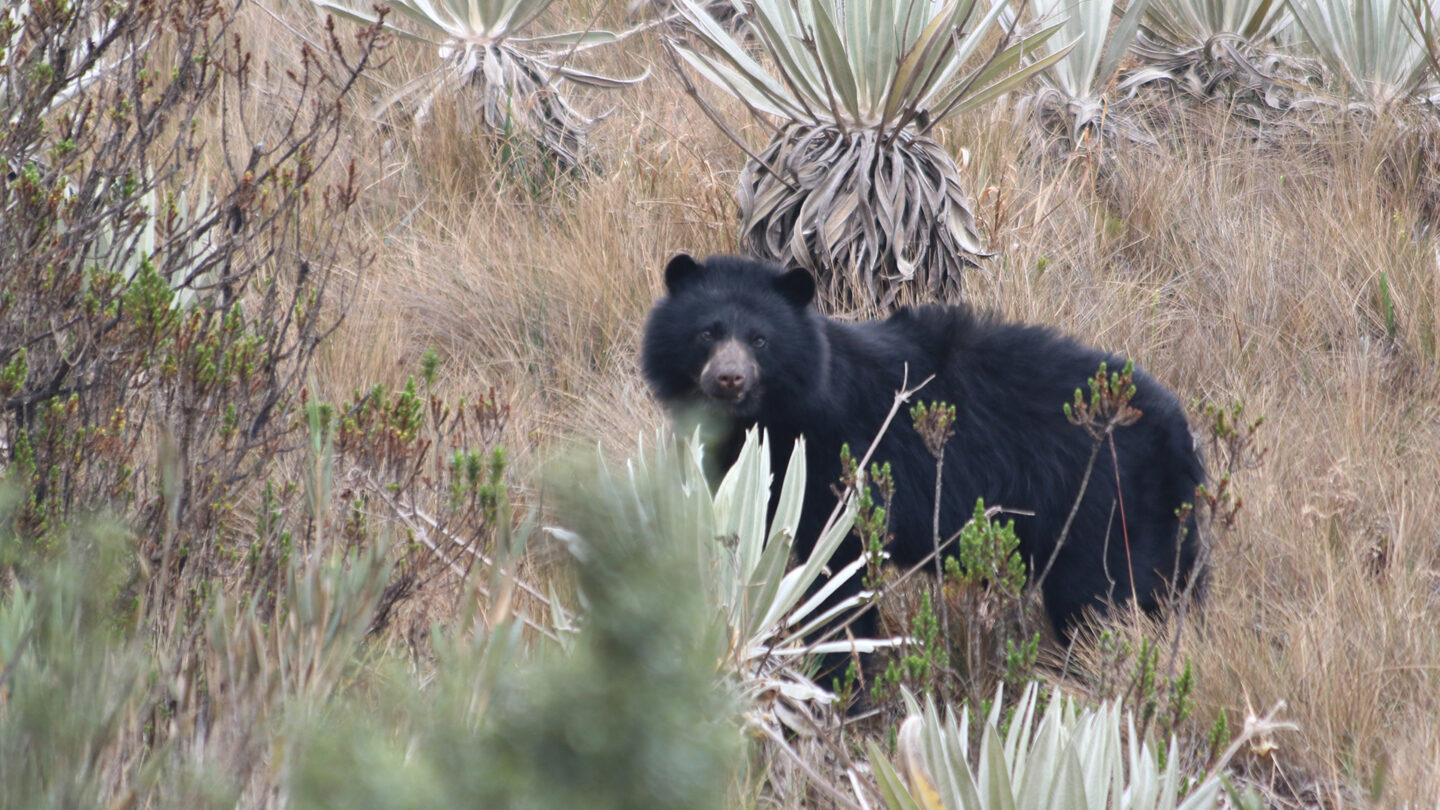
The Andean bear (Tremarctos ornatus) is the only bear species native to South America and nowadays it faces a precarious future. With populations dwindling across the continent, the species is under immense pressure from the synergistic effects of climate change, habitat loss, and human encroachment. Current projections indicate a drastic contraction of their suitable habitat in the coming decades, threatening the long-term persistence of this emblematic species.
While scientists continue to model these changes, predicting the bear’s future remains difficult. On the eastern slopes of the Andes, ecosystems are shifting in complex and unpredictable ways as temperatures rise and tree species move to higher elevations. These changes affect not only the Andean bear, but also other plants and animals that share its mountain home.
Studying the bears of Tamá Massif
Recently, José F. González-Maya (FFN Award winner 2015) and a team of researchers carried out the first systematic study to understand how Andean bears choose their habitats in Colombia and Venezuela. Between 2012 and 2015, they surveyed the Colombian side of the Tamá Massif, walking long transects both inside and outside Tamá National Natural Park. Along the way, they recorded bear tracks and signs, and compared these findings with environmental and human factors such as distance to towns, roads, rivers, and protected areas, as well as elevation and population density.
The study revealed that Andean bears clearly prefer Paramo habitat and tend to avoid areas with more human presence. The paramo is a high-altitude tropical mountain ecosystem found above the tree line and below the snowline in the northern Andes, characterized by cold, wet conditions and unique vegetation like giant rosette plants, shrubs, and grasses. The study further revealed that beyond resource availability, the Andean bears likely select Paramo because these areas are difficult for humans to access. This finding highlights the importance of protecting remote mountain habitats, which are essential for the bears’ survival and reproduction.
Why protecting the bear matters
Safeguarding habitats for the Andean bear is not just about saving one species. The bear plays an important role in the balance of mountain ecosystems: spreading seeds, maintaining forest health, and shaping the environment for other wildlife. Every forest, river, and mountain slope forms part of a fragile web of life, where every element depends on the others. Protecting the bear’s home means protecting this entire living network across the Andes.
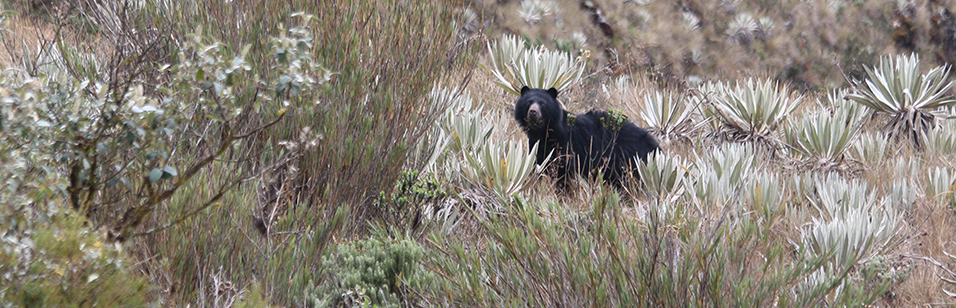 Andean bear in the Paramo landscape (photo credits: Oso Chingaza)
José’s broader conservation mission
In 2015, José F. González-Maya received the Future For Nature Award for his dedication to conserving two of Latin America’s most threatened ecosystems: the Talamanca Mountains in Costa Rica and the Sierra Nevada de Santa Marta in Colombia. The award brought him international recognition, helping him expand collaborations and take part in global conservation initiatives.
With the financial support of the FFN Award, José broadened his work from rescuing endangered frogs to safeguarding jaguars and launched the “Jaguar Friendly” initiative in Costa Rica, Venezuela and Colombia, now with over 80 coffee, cacao and forestry properties certified and over 13000 ha of jaguar habitat secured. His team also helped restore the last remaining population of the harlequin frog, showing that even small-scale conservation actions can make a huge difference.
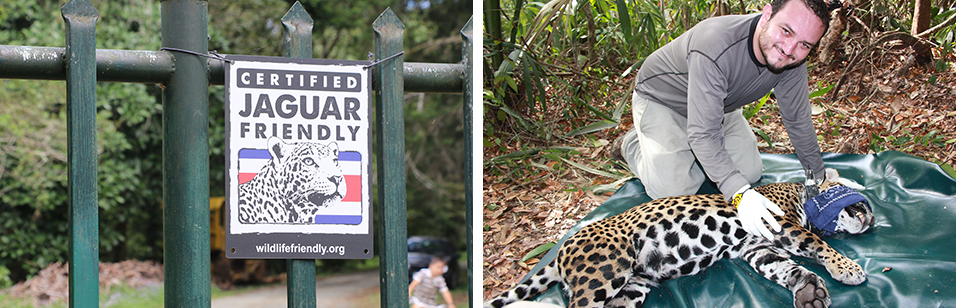 Left: A farm with which has ‘Jaguar Friendly’ production. Right: Jose with a jaguar for scientific research. (photo credits: José F. González-Maya)
Hope for the future
Thanks to the work of José and other dedicated conservationists, many critical habitats in Latin America now have a second chance. By combining science, community involvement, and international cooperation, these efforts give endangered species (and entire ecosystems) the opportunity to recover. In a rapidly changing world, his work reminds us that protecting nature is not only possible but essential for the planet’s future balance.
Written by Darina Khyzhko